
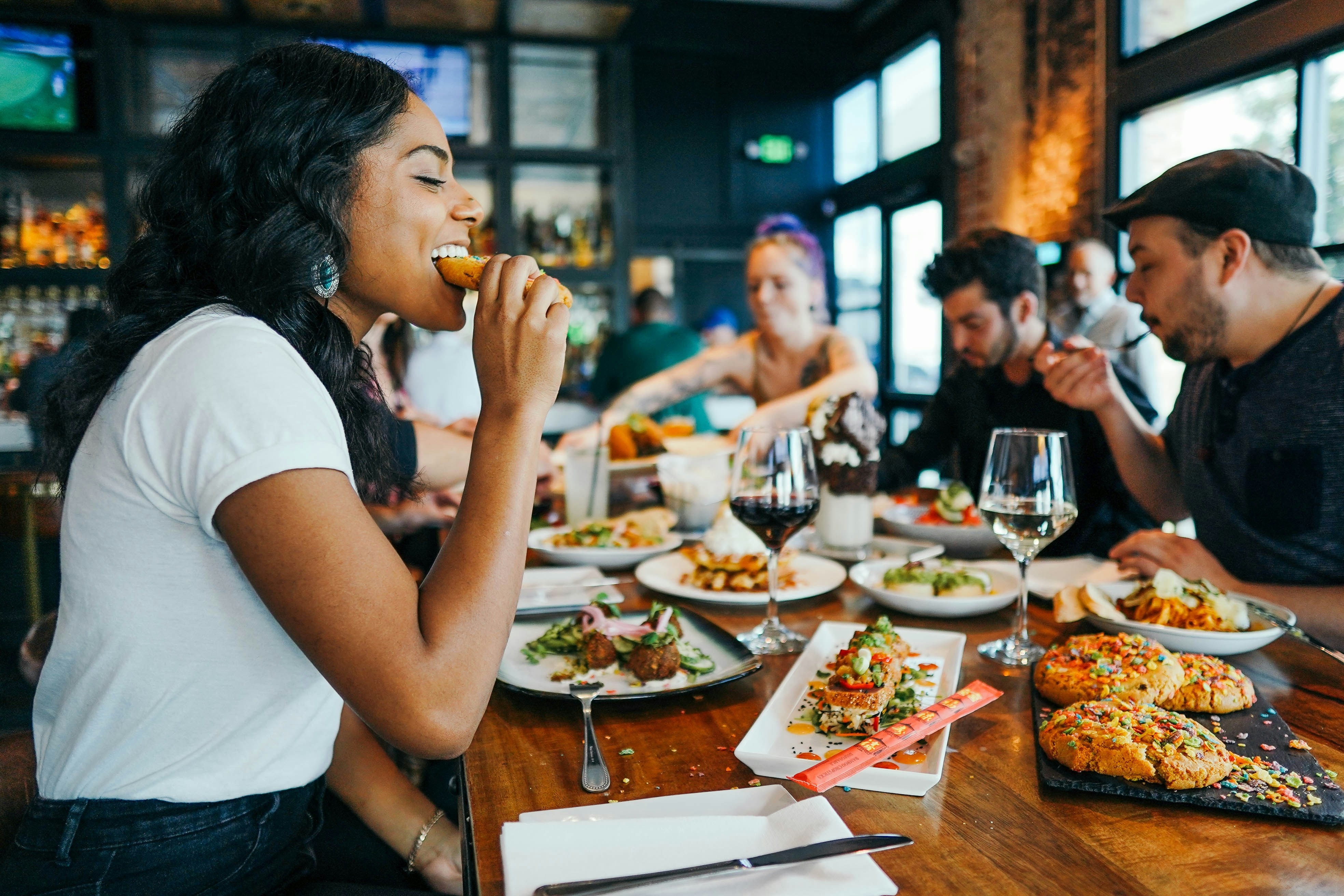
Restaurant influencer marketing has become one of the most powerful ways for restaurants to attract new diners.
Platforms like Instagram and TikTok have turned food creators into trusted voices that shape where people eat next. A single viral food video can send hundreds of new customers to a restaurant almost overnight. Today, many diners discover new restaurants through creators they follow rather than through traditional advertising or search.
But here's the problem.
Most restaurants can't turn that attention into measurable customer growth.
They partner with creators who generate thousands of views, yet have no idea whether those views translated into customers. Views feel like success, but views don't pay the bills.
The difference between influencer marketing that grows a restaurant and influencer marketing that quietly wastes money comes down to three things:
Choosing the right creators
Structuring collaborations properly
Tracking which creators actually drive diners and what those diners are worth
This guide covers all three. More importantly, it explains how restaurants can transform creator-driven attention into customers they can measure, retain, and grow, not just a temporary spike in social media engagement.
What Is Restaurant Influencer Marketing?
Restaurant influencer marketing is when restaurants collaborate with social media creators to promote their dining experience to the creator's audience.
Creators produce content such as videos, photos, and reviews that showcase the restaurant experience.
Common formats include:
TikTok restaurant reviews
Instagram Reels featuring dishes
"Best restaurants in NYC" roundups
Hidden gem and secret menu discoveries
Because creators have earned the trust of their audience, their recommendations often carry more weight than traditional advertising.
Instead of feeling like a promotion, the content feels like a recommendation from a friend.
Done well, restaurant influencer marketing can generate:
Brand awareness
Viral social exposure
More reservations and walk-ins
Buzz around new menu launches
A stronger online presence
Done poorly, it generates views and very little else.
Why Influencer Marketing Works for Restaurants
Dining decisions are deeply social.
When people decide where to eat, they increasingly look to TikTok and Instagram for inspiration.
Searches like:
Best ramen in NYC
Hidden gems in Brooklyn
Best brunch near me
have become part of everyday restaurant discovery.
Food creators influence these decisions because they don't simply show food: they capture the atmosphere, the experience, and the emotion of dining somewhere.
That authenticity is why creator content often outperforms traditional advertising.
How Restaurants Work With Influencers
Restaurants commonly collaborate with creators in several ways.
Sponsored Visits
Creators receive a complimentary dining experience in exchange for content.
Menu Promotions
Creators feature signature dishes, seasonal menus, or new launches.
Discovery Videos
Examples include:
Top Restaurants in NYC
Hidden Gems
Best Sushi in Manhattan
These videos can generate significant restaurant discovery.
Exclusive Experiences
Restaurants create secret menus, limited-time offers, or exclusive creator experiences that encourage immediate visits.
How to Run Restaurant Influencer Marketing
Step 1: Define Your Goals
Before reaching out to creators, determine what success looks like.
Are you trying to:
Increase weekday traffic?
Launch a new restaurant?
Promote a seasonal menu?
Build awareness?
Different goals require different creators.
Step 2: Look Beyond Follower Count
Follower count is one of the weakest predictors of restaurant success.
Instead evaluate:
Engagement
Audience relevance
Saves
Shares
Comments
Watch time
Micro-creators (10k–50k followers) and nano-creators (1k–10k followers) often outperform larger creators because they have stronger local influence.
Step 3: Evaluate Content Quality
Ask:
Does the food look amazing?
Does the creator tell a story?
Does the content capture the atmosphere?
Does it feel authentic?
Great restaurant content sells an experience—not just a dish.
Step 4: Make Sure Their Audience Is Local
Audience location matters more than audience size.
A creator with 500,000 followers across the country may generate fewer customers than someone with 15,000 highly engaged followers in your city.
Local creators drive:
Walk-ins
Reservations
Repeat visits
How Much Do Food Influencers Charge?
Typical pricing:
Nano: complimentary meal or small payment
Micro: $200–$1,000
Mid-tier: $1,000–$5,000
Some partnerships also include affiliate commissions, exclusive dining experiences, or event invitations.
The best collaborations create value for both the restaurant and the creator.
Five Common Restaurant Influencer Marketing Mistakes
Choosing creators based only on follower count.
Working with creators whose audience isn't local.
Not defining campaign expectations.
Treating creator partnerships as free publicity.
Failing to measure results.
The fifth mistake is by far the most expensive.
The Biggest Problem: Restaurants Can't Measure What Works
Most restaurants collaborate with multiple creators but have no idea:
Which creator actually brought customers
Which campaigns generated reservations
Which partnerships produced ROI
Without attribution, restaurants continue investing in creator partnerships without understanding which ones actually grow the business.
That's like investing in marketing with no feedback loop.
Restaurant Influencer Marketing Doesn't End at the First Visit
Even if attribution improves, many restaurants still stop too early.
A creator brings in a first-time diner.
Great.
Now what?
If that customer disappears after one visit, the restaurant has to spend more money acquiring another customer next month.
The restaurants seeing the strongest long-term growth treat every creator-driven visit as the beginning of a customer relationship, not the end of a campaign.
Every successful creator campaign follows the same journey:
Acquire — creators generate discovery and first visits.
Measure — every visit is attributed back to the creator who influenced it.
Retain — first-time diners receive reasons to return through loyalty and rewards.
Re-engage — personalized follow-ups encourage future visits.
Optimize — analytics reveal which campaigns generate the highest customer lifetime value.
When these pieces work together, influencer marketing becomes far more than content creation.
It becomes a repeatable customer growth system.
How DishPair Turns Influencer Marketing Into Customer Growth
DishPair was built to connect the entire customer journey.
Instead of stopping after creator content goes live, DishPair helps restaurants:
Acquire
Launch creator campaigns, secret menus, and Bite Drops through local food creators.
Measure
Every creator receives a unique link through the platform tied to a restaurant.
When diners visit, DishPair verifies and attributes the visit back to the creator who influenced them.
Retain
New diners enter loyalty experiences like Stars and Bite Drops that encourage repeat visits.
Re-engage
Automated SMS reminders bring customers back at the right time.
Optimize
Customer analytics reveal which creators, campaigns, and offers generate the greatest long-term revenue.
Instead of guessing whether creator marketing worked, restaurants can watch the entire customer journey, from discovering a creator's video to becoming a loyal regular.
The Future of Restaurant Influencer Marketing
Restaurant influencer marketing is evolving.
The future isn't simply working with more creators.
It's building measurable customer growth systems around creator partnerships.
Restaurants that know which creators generate customers—and can retain those customers over time—will outperform restaurants that continue optimizing for views alone.
The winners won't be the restaurants with the biggest campaigns.
They'll be the restaurants with the best measurement, strongest customer relationships, and the highest repeat visit rates.
Final Thoughts
Restaurant influencer marketing is one of the most effective ways to attract new diners, but only when it's treated as more than content creation.
Success comes from:
Choosing the right creators
Building authentic partnerships
Measuring real customer acquisition
Turning first-time diners into regulars
Creator marketing shouldn't end when someone watches a video.
It should end when that customer becomes a loyal guest.
That's the shift happening across the restaurant industry, and it's why platforms like DishPair are helping transform influencer marketing from a branding experiment into a measurable customer growth engine.